Sommer im Gartenreich Dessau – Fitbleiben im Beruf
Description
Summer at the UNESCO World Heritage Site Dessau-Wörlitzer Gartenreich Nutrition, exercise, stress prevention and yoga
How can we stay healthy and productive for as long as possible?
What if we could stay one step ahead of high blood pressure, diabetes and joint problems?
Three diagnoses that do not depend on fate, and far less on our genes than we think.
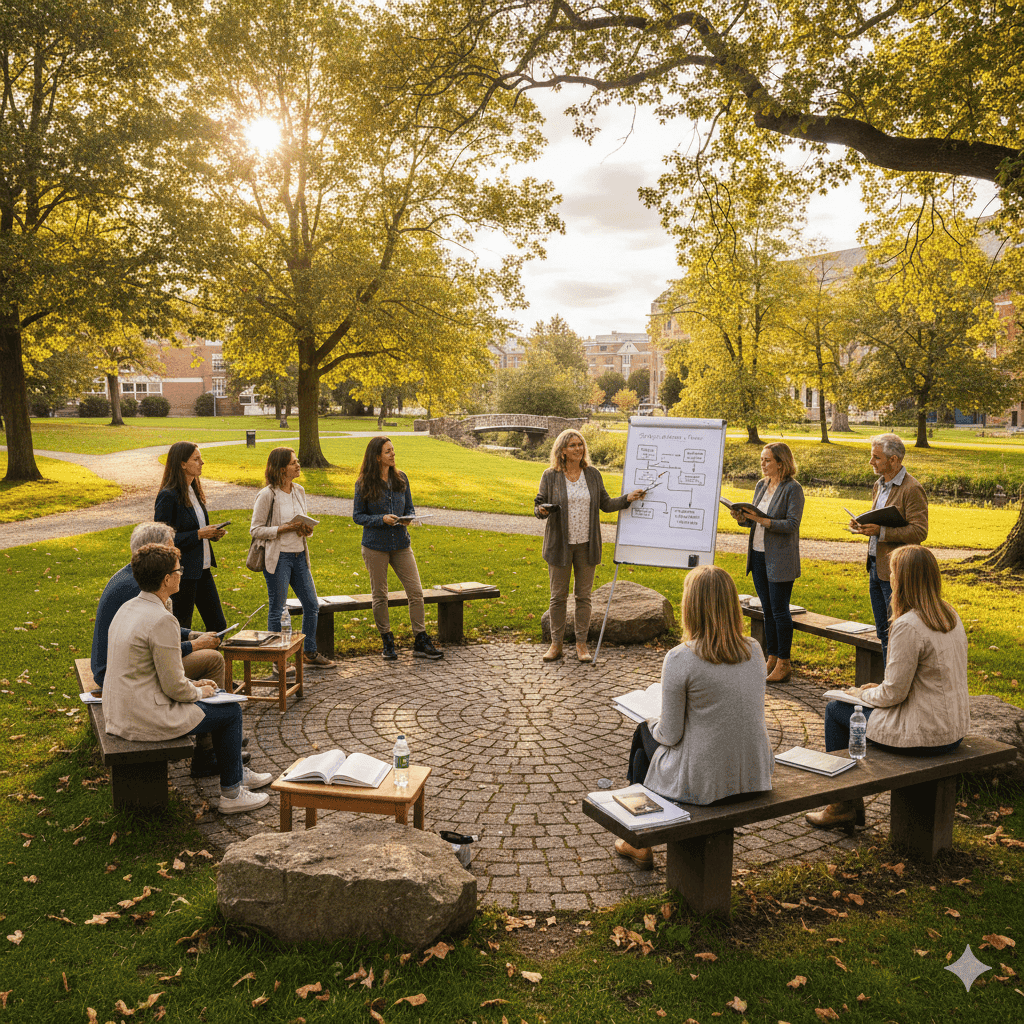
Our educational leave combines well-founded health knowledge with targeted exercise in nature. The two interlock and form the basis for long-term performance and stable health, also with a view to a longer working life and rising demands in everyday work.
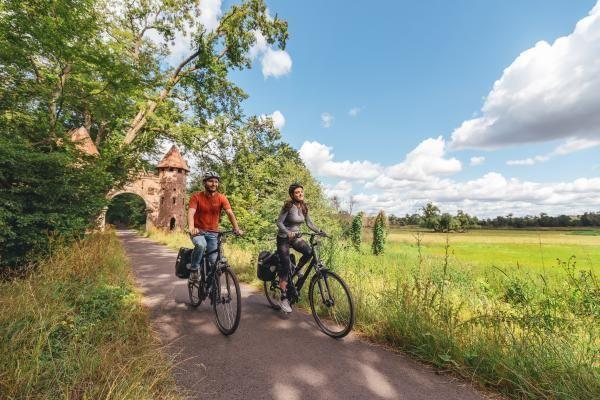
Weather permitting, we cycle along the Elbe cycle path beside the river to Wörlitz, home to the largest English landscape garden in continental Europe, lush green and in full bloom. With the Bauhaus tour through Dessau, we complete a unique combination of nature, garden art and architecture: one week together, learning, cycling and breathing deeply.
What awaits you in terms of content
Cardiovascular & Metabolism Scientifically sound strategies for prevention and strengthening Risk factors do not add up, they multiply. That is why every change is worthwhile.
- Demographic change & healthcare costs One in three Germans dies of cardiovascular disease, and 80% of these deaths would be preventable. These diseases cause costs of EUR 46 billion per year in Germany; prevention is also a societal necessity.
- Understanding the DASH diet The most thoroughly researched dietary approach to preventing high blood pressure, as effective as a blood-pressure-lowering medication.
- Nitric oxide (NO) The most important vessel-dilating messenger substance in our body. Let us learn how to use it deliberately.
- Preventing type 2 diabetes Roughly every second case of type 2 diabetes would be avoidable through lifestyle changes. How concrete changes in everyday behavior lower the risk of disease.
Back & Joint Health Exercises and knowledge for a pain-free musculoskeletal system What we do or fail to do every day determines our back health more than our age or our genes.
- Back pain as a widespread illness 80% of all adults are affected. It is the most common cause of work incapacity and early retirement.
- Breaking the fear-avoidance cycle Why protective posture intensifies pain and movement is the key, avoiding chronification.
- Recognizing muscular imbalances Shortened hip flexors and weak core muscles: typical patterns from desk work, movement in the office.
- Anti-inflammatory nutrition How omega-3 fatty acids and secondary plant compounds support joint health.
Stress Reduction Relaxation techniques for more inner calm Stress raises not only the pulse but, over the long term, also blood pressure: relaxation is not wellness, it is medicine.
- Modern working world Constant availability, work intensification, insecure employment: the modern working world produces stress faster than prevention programs can reduce it.
- Physiological classification Acute and chronic stress reactions, the connection between stress, blood pressure and health, nature and movement as balancing resources.
- Activating the vagus nerve Breathing techniques for switching over to the parasympathetic nervous system.
- Nature as a resource Evidence-based effects of movement in green spaces on stress hormones and regeneration.
Movement Cycling, yoga and relaxation methods in nature Prevention does not begin in the fitness studio but with every step, every movement and every posture of daily life.
- Lack of exercise as the norm Only 23% of adults reach the WHO recommendation of 150 minutes of moderate activity per week. Lack of exercise is not an individual weakness but a societal norm.
- Walking, hiking, mobilizing joints Everyday movement that strengthens the cardiovascular system and prevents back complaints.
- Yoga and gymnastics Combining flexibility and strengthening, as an impulse for everyday life.
- Relaxation and mindfulness exercises As a method for stress reduction and body awareness.
Practical Tools for Everyday Life Practical methods for the working day Every small step counts: health emerges in the moments between the big resolutions.
- Unfortunately true Studies show that without support, only 10-20% of what is learned reaches everyday life. In this course you receive concrete tools for transfer.
- Ideas for every area of life Movement at the workplace, nutrition on the go, short relaxation breaks: practical strategies that fit into real everyday life.
- Variety instead of a one-size-fits-all solution From mobilization exercises to mindfulness impulses and nutrition tips: find out what works for you.
- Take-home handout All exercises, checklists and tips from the seminar week, bundled to take home and keep using.
Understanding & Changing Knowledge as the key to lasting prevention Good theory is the best practice: those who understand why something works are more likely to stick with it.
- Health literacy Health literacy influences how people make decisions about their health, how they use prevention offers, understand and apply therapies, or navigate the health system.
- Background knowledge On nutrition, movement and relaxation: for health and vitality at work and in everyday life.
- Salutogenesis Antonovsky's concept: what keeps us healthy? The sense of coherence as a protective factor in working life.
- Motivation vs. habit Why willpower is not enough and how routines develop.
- Securing transfer The 72-hour principle, the WOOP method and the buddy system, plus follow-up discussion.
“Staying on track made easy” In the weeks after the seminar we support you with short impulses by email, so that good intentions become real habits.
Who is this course for?
For working professionals who want not only theoretical knowledge of what keeps us healthy but also want to experience it directly and integrate it into their everyday lives.
Our educational units take place outdoors: we are on the move together, and between sessions we continue by bike. The seminar day lasts about 6.5 hours, and we are back at the hotel around 3:30 to 4 p.m. During this time the legally required instruction time is fully delivered and used exclusively for seminar content.
Funding option: Participants from Rhineland-Palatinate can receive a 60% subsidy on the course fee through the QualiScheck. The funding application must be submitted before registering for the seminar.
Accommodation
We recommend booking at the B&B Hotel Dessau an der Marienkirche. It is located right in the city center.
Note: The hotel has a lockable bicycle room.
Seminar room: Schwabehaus Dessau, Johannisstraße 18
Things to look forward to
The bike tours pass almost all Bauhaus buildings, with short explanations on site. In addition, we ride through the Wörlitz Park and other small parks with palaces, as well as the biosphere reserve with the natural Elbe, which is especially green and charming in summer.
Why the Dessau-Wörlitzer Gartenreich?
The Dessau-Wörlitzer Gartenreich is a UNESCO World Heritage Site, the largest English landscape garden in continental Europe. A unique combination of nature, architecture and garden art awaits you.
And we live here! In Dessau you barely cycle 3 kilometers before a new, interesting sight comes into view. Cycling here is truly enjoyable, and the paths are flat and well developed! The nearby Elbe meadows are just as impressive as the numerous small palaces and parks in the surroundings, as well as the garden complex in Wörlitz and the modern architecture of the Bauhaus.
We look forward to welcoming you!
Tip: Extend your stay by a few days to visit the Bauhaus and the Hugo Junkers Technology Museum, as well as the Luther city of Wittenberg, which can be reached in 45 minutes by regional train.
Your instructors
Annett Klepsch Diploma in health and nursing sciences Resilience trainer Nurse
Annett Klepsch develops and leads practical seminars focused on self-care, nutrition, exercise and motivation. Her aim: to empower people to shape their health actively and consciously.
- Over 35 years of professional experience as a nurse
- More than 15 years of training nursing professionals
- Still enjoys passing on knowledge and constantly has new ideas.
Jens Mewes Certified fasting leader, forest bathing course leader Diploma in agriculture
Jens Mewes accompanies participants with calm and practical experience. His strength: translating theoretical knowledge into everyday routines that work.
- Certified fasting leader
- Passionate cook
- In-depth knowledge of nutrition and prevention
Schedule
Courses begin on Monday morning and end on Friday early afternoon. On occasion we will also meet in the evening.
Start: Monday 10:30 a.m. End: Friday 2:30 p.m.
What do I need to bring?
This depends on the course. As a rule you will need comfortable clothing for movement sessions, writing materials and, if needed, weatherproof clothing for outdoor activities. You will receive the exact information in your booking confirmation.
What about allergies or intolerances?
Please state any allergies or intolerances when booking. We will pass this information on to the venue and ensure appropriate catering.
How your educational leave unfolds
Morning
Meet in the seminar room at the Schwabehaus. The first session of the day takes place here.
Cycling & Learning
The seminar content is spread over the whole day and alternates with phases of cycling. We will not be back until the afternoon. Cycling distance: approx. 40-50 km per day, woven into the seminar content. No special fitness is required. The paths through the Dessau-Wörlitzer Gartenreich are well developed and have no major elevation changes.
Late Afternoon
Time for recovery and regeneration, for a stroll through town, or a coffee on the market square.
Evening
A small tour of restaurants in Dessau for dinner. Perhaps a get-together in the seminar room in a convivial group. One evening, an evening event is planned.
What does a typical course day look like?
A course day usually begins at 9:00 a.m. with a theoretical session, followed by practical exercises and reflection phases combined with movement sessions. After a lunch break there are further workshops. The seminar day ends in the afternoon. Hiking and cycling are woven into the seminar content. The exact schedule varies by course and will be communicated in advance.
Recognition by federal state
What applies in your state, entitlement and deadlines: Bildungsurlaub by state →
Provider
Location
Johannisstraße 18, 06844 Dessau-Roßlau-Dessau, Deutschland
Open in Google MapsLoad the map? This opens a connection to Google Maps (Google LLC, USA) and transfers your IP address to Google. See our Privacy Policy for more information.
€420
Accommodation optionalMon, 06/28 – Fri, 07/02